April 19, 2026
The Homeowner’s Guide to Maximizing Backyard Privacy
Your backyard should be your personal sanctuary-a place to relax with family, host weekend barbecues...
Learn more

Living in California means enjoying some of the most beautiful weather in the country. However, our unique climate-characterized by months of relentless, intense sunshine followed by sudden, heavy winter rainstorms-creates an incredibly hostile environment for traditional exterior architecture.
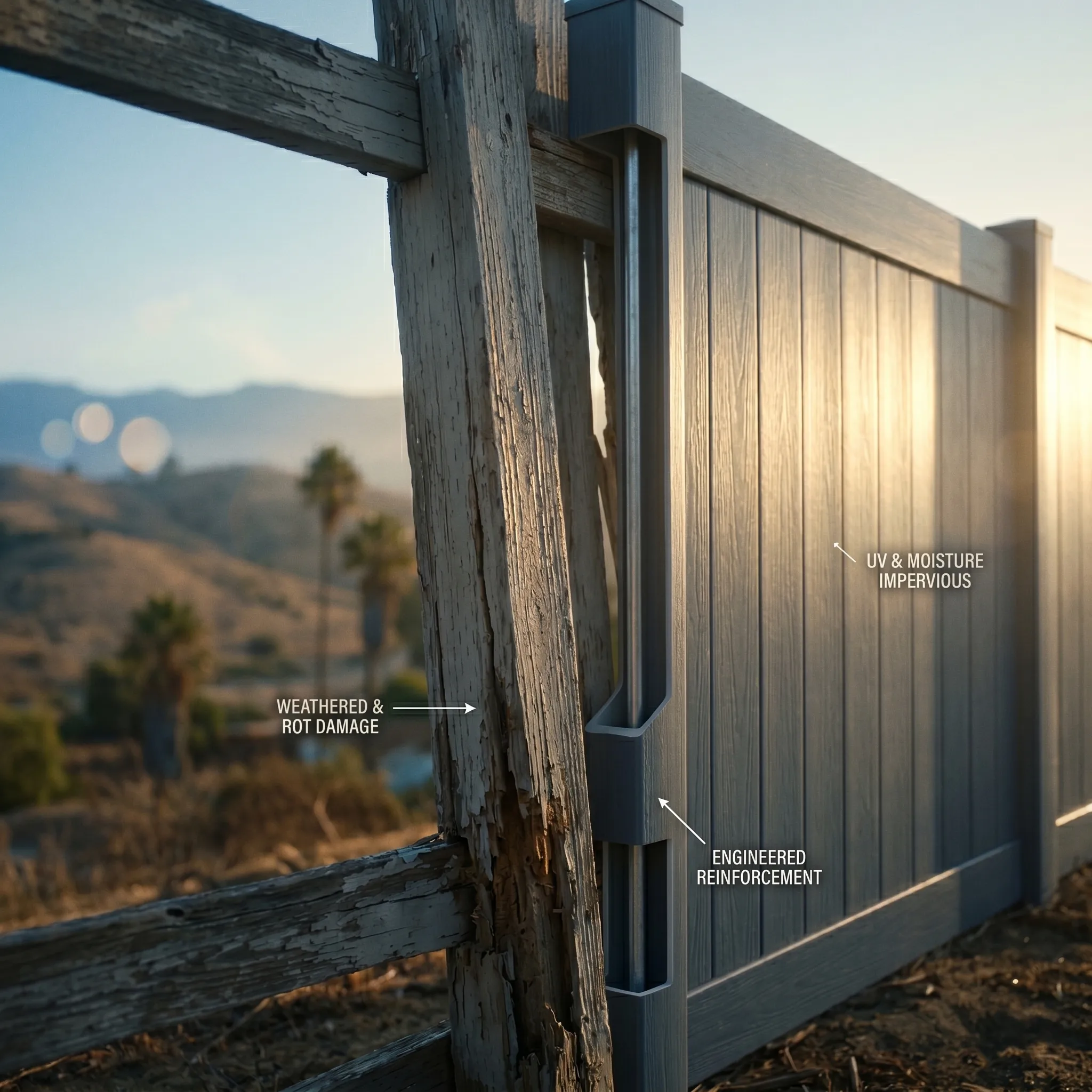
If you have a wooden privacy fence, you have likely watched it rapidly age, warp, and lean. This is not a sign of a cheap installation; it is the inevitable result of the California climate. Here is exactly what is happening to your perimeter, and why upgrading to commercial-grade custom vinyl is the only permanent solution for your estate.
California wooden fences are subjected to a brutal, never-ending cycle that rapidly destroys their structural integrity:
Because the “bake and soak” cycle compromises the base of the wooden posts, the entire structure becomes dangerously weak. When the Santa Ana winds or heavy coastal storms hit, those rotted posts simply snap at the soil line. Every winter, thousands of California homeowners wake up to find their heavy wooden fences completely blown over, leaving their backyards totally exposed and their pets vulnerable to escaping.
California is prime real estate for both drywood and subterranean termites. A deteriorating wooden fence is essentially an all-you-can-eat buffet that leads these highly destructive pests straight toward your home’s main structure. Treating a wooden boundary for termites requires harsh, expensive chemicals that wash away in the rain, forcing you into an endless cycle of costly pest control.
If you want to stop repairing blown-down fences and paying for expensive stains that burn off in a single summer, it is time to upgrade the material. Our custom vinyl fences are engineered specifically to defeat the California climate.
Stop throwing your hard-earned money at a wooden fence that the California climate is actively destroying. By investing in a custom-built vinyl boundary from Elevate Fence Group, you are choosing a permanent, structural masterpiece that requires absolutely zero weekend chores.
Do not wait for the next major windstorm to blow your rotting fence down. Contact our expert local team right now to schedule your complimentary site audit. We will meticulously measure your yard, showcase our stunning weather-resistant color samples, and provide a highly competitive estimate to permanently secure your property.